
Hall effect keyboards are the biggest thing to happen to gaming keyboards in years, and 2026 is the year the technology went fully mainstream. Instead of a metal contact that closes at one fixed point, every key uses a magnet and a sensor that tracks exactly how far the key has travelled. That one change unlocks adjustable actuation, Rapid Trigger, and analog input — features that make a real difference in competitive games and feel noticeably better for everyday typing too.
We researched the current 2026 lineups from Wooting, Razer, Keychron, SteelSeries and the budget brands, and picked the seven hall effect keyboards worth your money right now — from the $200 flagship every pro seems to use to genuine Rapid Trigger boards under $90.
Best Hall Effect Keyboards 2026 at a Glance
| Keyboard | Best For | Actuation | Polling | Price |
|---|---|---|---|---|
| Wooting 80HE | Best overall | 0.1–4.0 mm | 8,000 Hz | $199.99 |
| Razer Huntsman V3 Pro TKL 8KHz | Best for FPS | 0.1–4.0 mm | 8,000 Hz | $219.99 |
| Keychron Q1 HE | Best for typing & wireless | 0.2–3.8 mm | 1,000 Hz | $219.99 |
| SteelSeries Apex Pro TKL Gen 3 | Best premium all-rounder | 0.1–4.0 mm | 8,000 Hz | ~$199.99 |
| Wooting 60HE v2 | Best compact 60% | 0.1–4.0 mm | 8,000 Hz | $179.99 |
| Gamakay TK75 HE | Best budget wireless | Adjustable | 1,000 Hz | ~$69–82 |
| Drunkdeer G65 | Best under $90 | Adjustable | 8,000 Hz | ~$79 |
1. Wooting 80HE — Best Overall
The Wooting 80HE is the board every other hall effect keyboard gets measured against, and in 2026 it is still the one to beat. Its Lekker L60 V2 magnetic switches let you set the actuation point anywhere from 0.1 mm to 4.0 mm on every single key, and true 8,000 Hz polling keeps input latency among the lowest ever measured on a keyboard. Wootility — the browser-based software — remains the cleanest way to tune Rapid Trigger, and features like Rappy Snappy give competitive players tools no rival matches.
It is the most-used keyboard among CS2 and Fortnite professionals for a reason, and the 80% layout keeps the function row and arrow keys that the 60% boards lose, so it works just as well for work as for games. The trade-offs are a wired-only connection and a plastic case at this price.
Key specs: 80% layout, 84 keys · Lekker L60 V2 Hall effect switches · 0.1–4.0 mm adjustable actuation · 8,000 Hz polling · Rapid Trigger, Rappy Snappy, Snappy Tappy · Wired USB-C only · $199.99
Pros: Best-in-class Rapid Trigger and software; lowest measured latency tier; hot-swappable switches; huge pro player adoption.
Cons: No wireless option; plastic case feels plain for $200; sold direct, so stock can be tight.
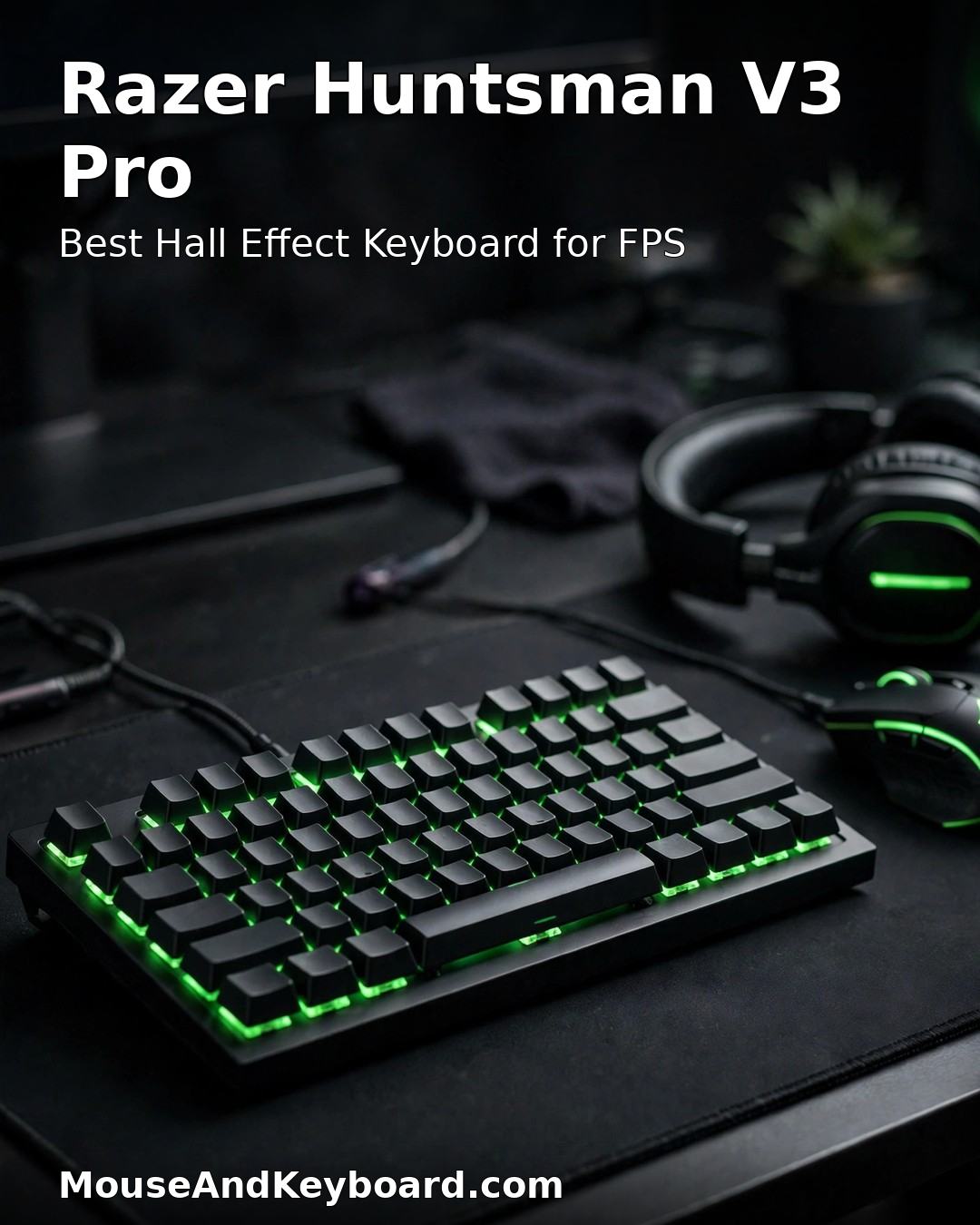
2. Razer Huntsman V3 Pro TKL 8KHz — Best for FPS
Razer takes a different route to the same idea: the Huntsman V3 Pro uses analog optical switches instead of magnets, but the result is the same — per-key actuation from 0.1 mm to 4.0 mm, Rapid Trigger, and 8,000 Hz polling. Where it pulls ahead of Wooting is convenience: you can adjust actuation on the board itself, without any software running, which matters if you move between PCs or play on console. Its measured latency sits in the same elite tier as the 80HE.
It is the fastest-feeling board in this list for pure FPS play, with a solid aluminium top plate and a comfortable, low-profile feel. The switches are not hot-swappable, and Razer Synapse is heavier than Wootility, but if you want the quickest setup-to-game experience from a big brand, this is it.
Key specs: Tenkeyless layout · Analog Optical Gen-2 switches · 0.1–4.0 mm adjustable actuation · 8,000 Hz polling · Onboard actuation adjustment · Wired USB-C · $219.99
Pros: Elite latency; adjust actuation without software; premium aluminium build; widely available in stores.
Cons: Switches are not hot-swappable; Synapse software is heavy; no wireless version.
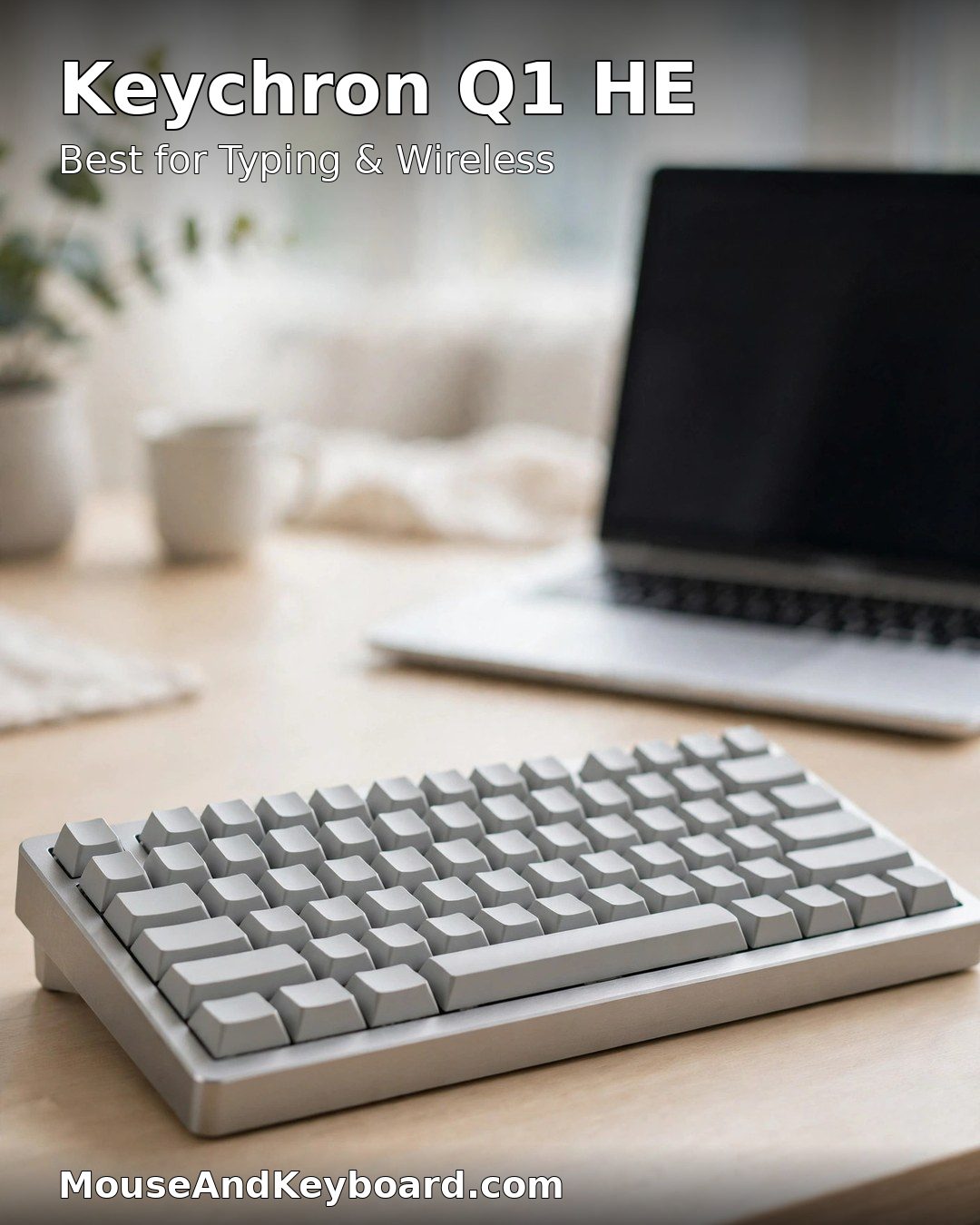
3. Keychron Q1 HE — Best for Typing & Wireless
The Keychron Q1 HE is the hall effect keyboard for people who also have to type for a living. It takes the aluminium Q-series chassis that programmers already love, adds Gateron double-rail magnetic switches with actuation adjustable from 0.2 mm to 3.8 mm, and — unlike Wooting and Razer — gives you full wireless freedom: USB-C, 2.4 GHz and Bluetooth, with a 4,000 mAh battery. It also keeps full QMK/VIA support, so it is the only board here that fits an open-source firmware workflow.
Its 1,000 Hz polling ceiling is lower than the 8K flagships, but for typing, productivity and all but the most demanding competitive play you will not feel the difference. If you want one keyboard for work and games, and you want it wireless, this is the pick.
Key specs: 75% layout, 81 keys · Gateron double-rail magnetic switches · 0.2–3.8 mm adjustable actuation · 1,000 Hz wired/wireless · Tri-mode: USB-C, 2.4 GHz, Bluetooth 5.1 · Full QMK/VIA support · $219.99
Pros: Only true wireless pick in this list; superb aluminium build; QMK/VIA and open firmware; great typing feel.
Cons: 1,000 Hz polling cap; heavier than the competition; profiles are software-based, not stored on board.
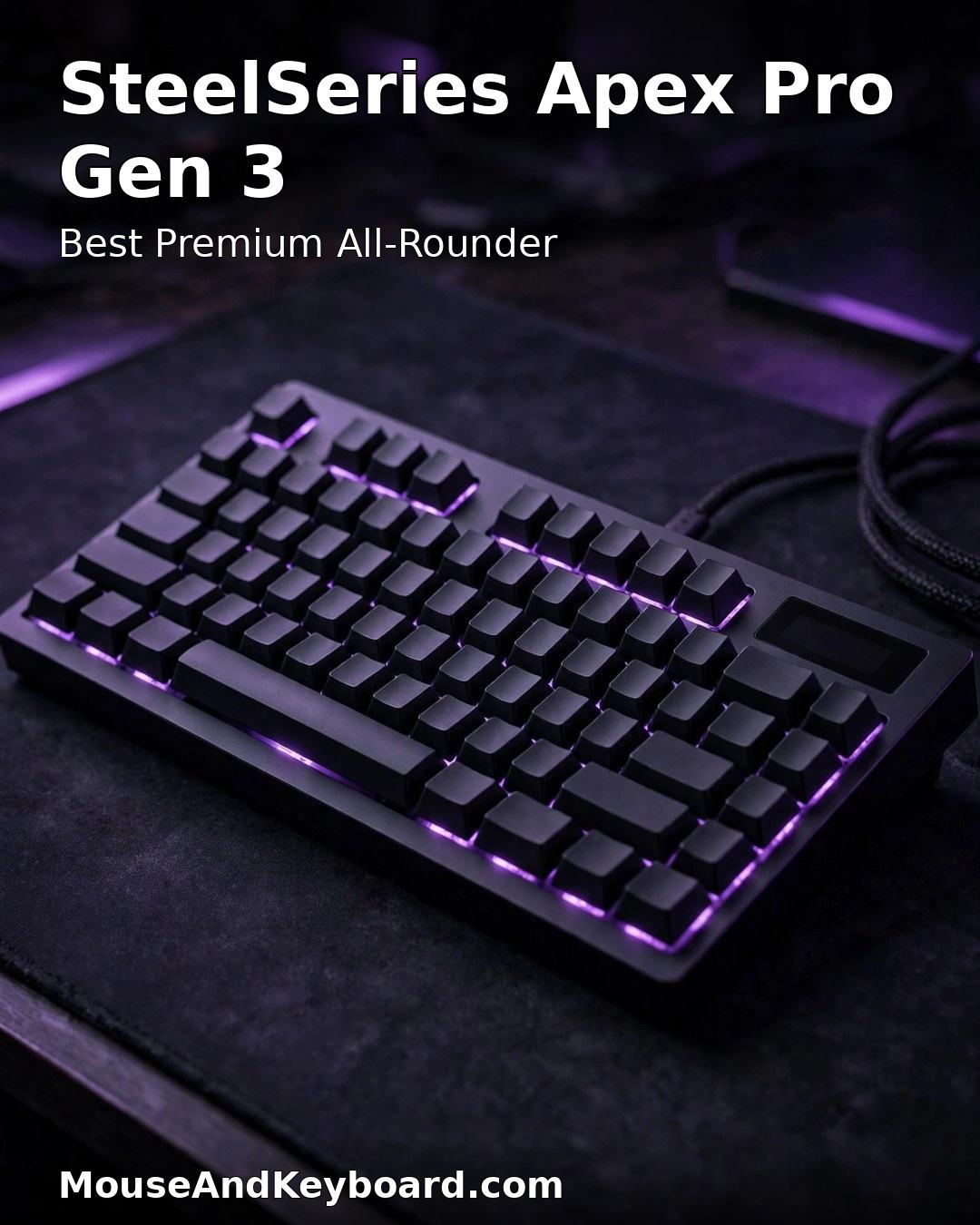
4. SteelSeries Apex Pro TKL Gen 3 — Best Premium All-Rounder
SteelSeries rebuilt its flagship around OmniPoint 3.0 switches with a third-generation hall effect sensor, and the Apex Pro TKL Gen 3 is the most feature-packed board here. Actuation adjusts from 0.1 mm to 4.0 mm across 40 levels, Rapid Trigger goes down to 0.1 mm sensitivity, polling runs at 8,000 Hz, and a small OLED display shows your current profile and settings at a glance. The exclusive Protection Mode helps prevent accidental key presses in game, and the 2026 limited editions add Speed and Control switch weights so you can choose a lighter or firmer feel.
It is the best choice if you want every feature in one board from a brand with wide retail support. The ABS keycaps are the weak point at this price — PBT would be expected — but the typing experience and the software presets are excellent.
Key specs: Tenkeyless layout · OmniPoint 3.0 Hall effect switches · 0.1–4.0 mm adjustable actuation · 8,000 Hz polling · OLED display · Rapid Trigger, Rapid Tap, Protection Mode · Wired USB-C · ~$199.99
Pros: Most complete feature set; OLED display; excellent GG QuickSet presets; Speed/Control switch options.
Cons: ABS keycaps at a premium price; wired only; GG software takes time to learn.
5. Wooting 60HE v2 — Best Compact 60%
If you play competitive shooters and want maximum mouse space, the 60HE v2 takes everything that makes the 80HE great — the same Lekker switches, the same 0.1–4.0 mm actuation range, the same true 8,000 Hz polling and Wootility software — and squeezes it into a 60% board. The v2 rebuild adds a proper aluminium case option and a much better-built feel than the original 60HE, which is why it leads the Valorant and Rainbow Six Siege pro scenes.
You lose the function row, arrow keys and navigation cluster, so it is a poor choice as an only keyboard for work. As a dedicated gaming board, though, nothing smaller performs better.
Key specs: 60% layout · Lekker Hall effect switches · 0.1–4.0 mm adjustable actuation · 8,000 Hz polling · Rapid Trigger and analog input · Wired USB-C · From $179.99
Pros: Same flagship performance as the 80HE in a smaller board; aluminium case option; huge desk space saving.
Cons: No function row or arrow keys; not ideal as a work keyboard; wired only.
6. Gamakay TK75 HE — Best Budget Wireless
The Gamakay TK75 HE is the proof that hall effect stopped being a premium feature. For roughly $69–82 you get real magnetic switches with adjustable actuation and Rapid Trigger, tri-mode connectivity (wired, 2.4 GHz and Bluetooth), a 4,000 mAh battery, hot-swappable sockets and a solid 75% layout with a volume knob. It cannot match the Wooting software or the 8K polling of the flagships, but for casual and mid-level competitive play it delivers the core hall effect experience at a third of the price.
Key specs: 75% layout, 81 keys · Gamakay magnetic Hall effect switches · Adjustable actuation · 1,000 Hz polling · Tri-mode wireless · 4,000 mAh battery · ~$69–82
Pros: Wireless and Rapid Trigger under $85; great value; hot-swappable; knob included.
Cons: Basic software; 1,000 Hz polling; switch feel is less refined than the premium boards.
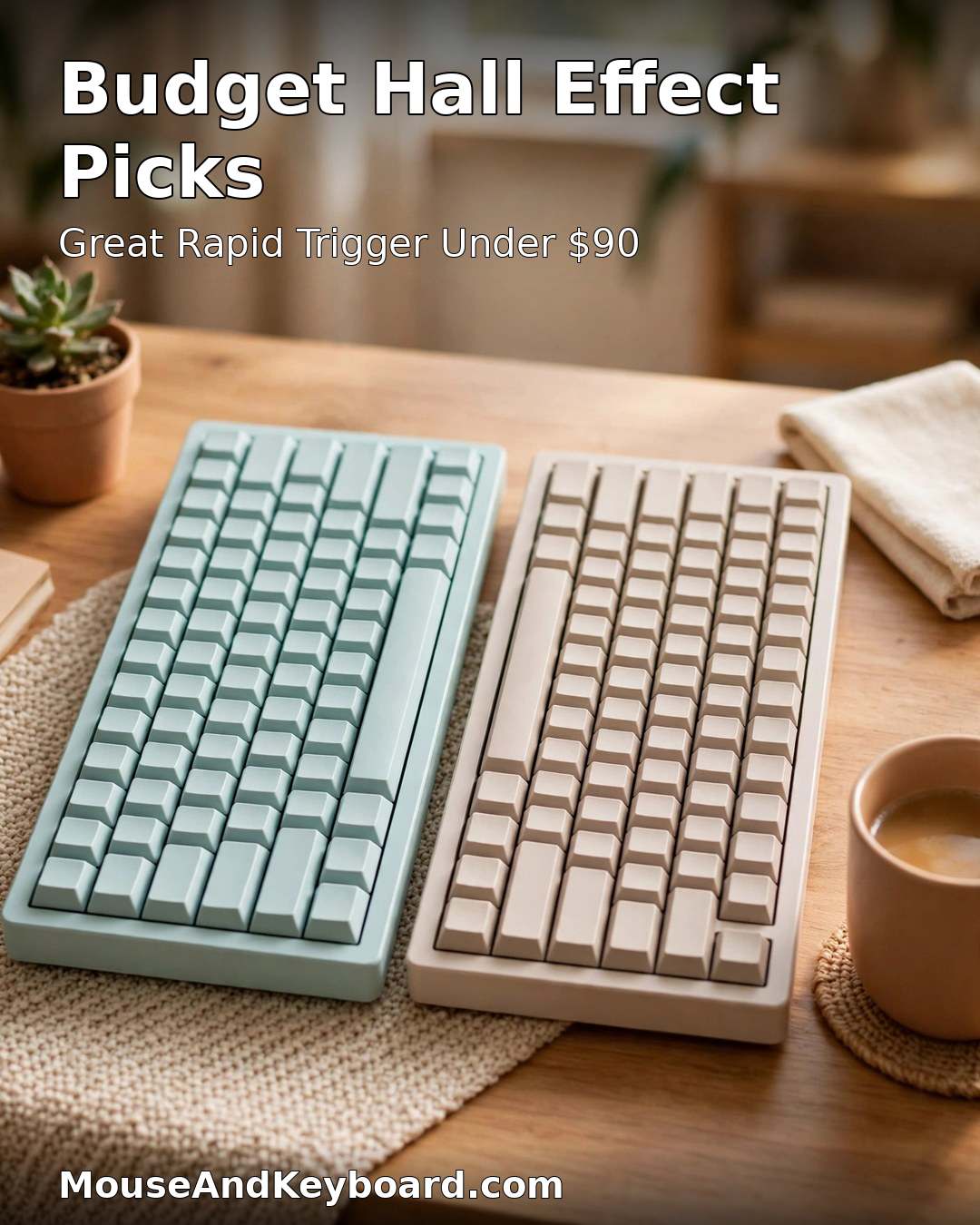
7. Drunkdeer G65 — Best Under $90
The Drunkdeer G65 is the cheapest way to get genuine Rapid Trigger on your desk. This compact 65% board pairs magnetic switches with adjustable actuation and 8,000 Hz polling — a spec sheet that embarrasses boards three times its price — for around $79. It is wired only, and the software and keycaps are clearly budget-grade, but the core gaming performance is real, and it is the board we recommend to anyone who wants to try hall effect without committing $200.
Key specs: 65% layout · Magnetic Hall effect switches · Adjustable actuation with Rapid Trigger · 8,000 Hz polling · Wired USB-C · ~$79
Pros: Real Rapid Trigger and 8K polling under $90; compact 65% layout; excellent first hall effect board.
Cons: Wired only; budget keycaps and software; no wireless or Bluetooth.
How to Choose a Hall Effect Keyboard
Actuation range matters more than the brand. Look for 0.1 mm to 4.0 mm of adjustment — that range lets you set hair-trigger keys for movement and deeper, safer keys for abilities you do not want to misfire. Boards that only adjust in coarse steps are less useful.
Polling rate is real, but small. 8,000 Hz polling shaves fractions of a millisecond off input latency. It matters on a fast PC with a high-refresh monitor; on a 60 Hz display you will not notice it. Do not pay a big premium for 8K alone.
Pick the layout for your desk, not the spec sheet. A 60% board frees mouse space for low-sensitivity FPS play, but if this is also your work keyboard, an 80% or 75% layout with arrow keys is far more practical.
Check the software. Wootility, Synapse, GG and Keychron Launcher all do the same job differently. Browser-based tools like Wootility work everywhere; heavy desktop suites can be a chore. Make sure your settings save to the board itself if you play on console or switch PCs.
Know the tournament rules. Rapid Trigger itself is legal everywhere, but features that automate opposing inputs — SOCD, Snap Tap and similar — are banned in Counter-Strike 2 and restricted in Valorant. Keep those features off in competitive play.
Hall Effect vs Mechanical Keyboards
A traditional mechanical switch is a physical contact: press far enough and two metal leaves touch. A hall effect switch never touches anything — a magnet moves past a sensor, and the keyboard reads the exact position. That means no fixed actuation point, no debounce delay, and no contact wear. Mechanical boards still win on switch variety and sound options, but for adjustable, repeatable gaming performance, hall effect is simply the better technology in 2026.
Frequently Asked Questions
What is a hall effect keyboard?
A hall effect keyboard uses magnets and sensors instead of metal contacts to detect key presses. The sensor measures exactly how far each key has travelled, which allows adjustable actuation points, Rapid Trigger and analog input — things a normal mechanical switch cannot do.
What is Rapid Trigger?
Rapid Trigger resets a key the instant you start releasing it, instead of waiting for the key to travel back past a fixed reset point. The key can re-actuate immediately, which makes counter-strafing and repeated key presses noticeably faster in FPS games.
Are hall effect keyboards worth it?
Yes, if you play competitive games or want one keyboard that adapts to both gaming and typing. With budget boards now under $90, the price premium over a good mechanical keyboard is small — and the adjustable actuation is something no mechanical board can match.
Do hall effect keyboards work on PS5 and Xbox?
Yes, as keyboards they work on both consoles, but the configuration software does not run there. Set your actuation and Rapid Trigger settings on a PC first and save them to the keyboard’s onboard memory — the Wooting 80HE, Razer Huntsman V3 Pro and SteelSeries Apex Pro Gen 3 all store profiles on board.
What is the best hall effect keyboard for FPS games?
The Wooting 80HE is the best overall choice, with the lowest measured latency and the most mature software. The Razer Huntsman V3 Pro TKL 8KHz is a close second and the better pick if you want to adjust actuation on the board without software.
What is the cheapest good hall effect keyboard?
The Drunkdeer G65 at around $79 is the cheapest board with real Rapid Trigger and 8,000 Hz polling. The Gamakay TK75 HE at roughly $69–82 is the cheapest option if you also want wireless.
Final Verdict
For most gamers in 2026, the Wooting 80HE at $199.99 is the hall effect keyboard to buy — the best software, the fastest response and the layout that works for games and work alike. Competitive FPS players who want onboard adjustment should look at the Razer Huntsman V3 Pro TKL 8KHz, typists and wireless users should get the Keychron Q1 HE, and anyone on a budget should start with the Drunkdeer G65 or the Gamakay TK75 HE. Whichever you choose, you are getting a keyboard that adapts to how you play instead of forcing you to adapt to it.
If you are building a full setup around your new keyboard, pair it with a fast mouse from our best wireless gaming mouse guide, and if your keyboard also needs to earn its keep at work, the best keyboards for programming we refreshed this week include the Keychron Q1 HE’s mechanical cousins.
Last updated: November 2026. Prices are typical US street prices at the time of writing and may change.